
In this edition of The Brief, we explore why the success of a destination isn't determined by its architecturealone. In an increasingly competitive landscape, destination branding shapes how a place is perceived, experienced and remembered. It transforms developments into places people choose to return to, rather than simply pass through.
Why destination branding matters
Every large-scale development eventually faces the same question: Will this become somewhere people choose to gather, or simply somewhere they pass through?
The answer isn't found in the floor plan, the façade or the tenant mix. It's found in the role the destination comes to play in the life of the city.
Architecture creates space. Brand creates place.
The greatest risk facing a new destination isn't that people won't like it. It's that they'll file it away as just another premium mall, mixed-use development or waterfront precinct.
Categories attract curiosity. Meaning creates belonging.
That distinction matters because space and place are fundamentally different. Space is designed and constructed. Place is earned through the experiences, rituals and communities that form around it.
The most successful destinations aren't necessarily the most expensive or architecturally ambitious. They're the ones that become part of everyday life.
We believe that prestige follows participation, not the other way around. Developments create occupancy. Destinations create participation.
Destination branding reaffirms that difference. It defines not just what a place is, but why it matters, who it belongs to and the role it should play within the city.
The Destination Value Chain
One of the biggest misconceptions about destination branding is that its value lies in marketing. In reality, its value compounds over time.

Architecture creates the space.
Brand shapes the experience.
Experience encourages participation.
Participation builds belonging.
Belonging creates advocacy, demand, stronger leasing performance and long-term value.
Great destination brands don't simply attract visitors. They create places people choose to make part of their lives.
What this looks like in practice

One of the biggest lessons we've learnt from destination branding is this:
Your biggest competitor is rarely another development. It's the category itself.
On a landmark waterfront district project, the challenge wasn't competing against neighbouring developments. It was escaping the category altogether. Without a clear positioning, the destination risked becoming another luxury retail precinct, somewhere people visited once before moving on.
We positioned the development as the city's contemporary social ground, a destination people would choose to gather long before they chose to shop.
That strategic decision shaped far more than communications. It created what a destination brand really delivers to the communities it serves; a sense of belonging. Not simply a logo or a launch campaign, but a shared language, a sequence of experiences and a compelling reason for a city to make a place its own.
The commercial impact
Destination branding isn't a creative exercise. It's a commercial one.
JLL's Experience Matters 2025 research found that 69% of consumers are willing to pay more for high-quality experiences, while destinations with strong placemaking benefit from longer dwell times and stronger visitor perception.
Research by Zenker and Braun also links strong destination brands with higher visitor spending, repeat visitation and greater investor confidence.
The commercial impact compounds over time.
Well-branded destinations attract stronger communities, generate greater advocacy, command stronger leasing outcomes and create lasting value.
Those without a distinctive identity are left competing on square feet, location and price.
The next frontier: Destination Intelligence
Destination branding has traditionally focused on helping people discover, experience and remember a place. Today, destinations are encountered long before anyone arrives.
They appear in maps, search results, reviews, creator content, booking platforms and increasingly, conversations with AI assistants. That changes the question.
It is no longer simply:
"What story should we tell?"
It is becoming:
"What information, experiences and signals make our destination easy to discover, easy to recommend and worth returning to?"
The strongest destinations won't simply have compelling identities. They'll have connected ecosystems of content,experiences and data that help people, platforms and AI understand what makesthem distinctive.
Destination branding is evolving into Destination Intelligence.
Not replacing creativity. Extending it.
Building destinations with evidence
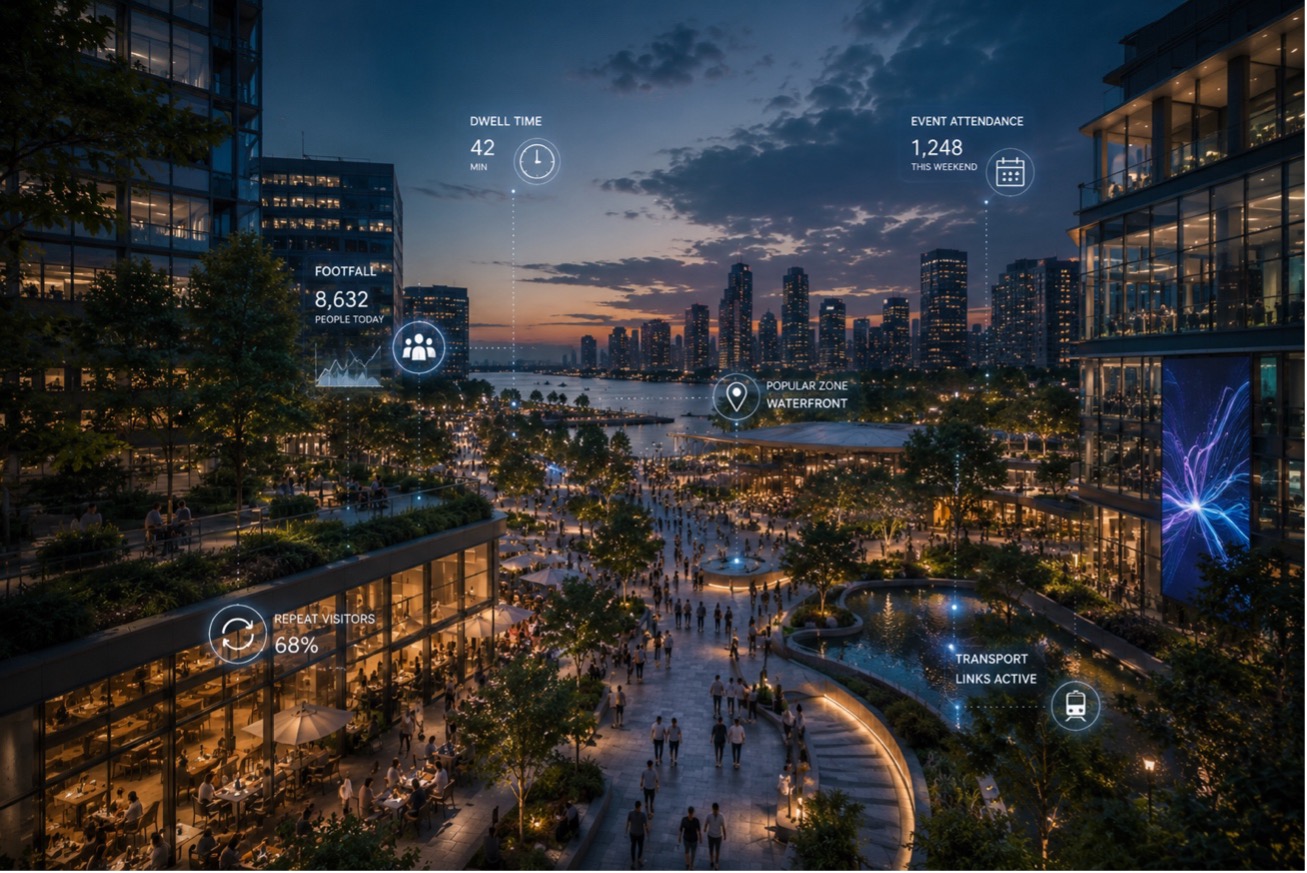
Destination Intelligence is powered by evidence.
Audience insights, behavioural data and culturalu nderstanding reveal how people experience a place, what they value and where genuine opportunities for differentiation exist.
Footfall.
Dwell time.
Search behaviour.
Content engagement.
Event participation.
Tenant performance.
Visitor sentiment.
Together, these signals reveal whether a destination is living up to its promise or simply telling a good story.
Data doesn't replace creativity. It gives creativity direction.
Where to begin

Nobody falls in love with a floor plan. They fall in love with places that become part of their lives.
The earlier destination branding enters the process, the greater its influence, shaping everything from naming and placemaking to leasing, programming, digital experience and long-term commercial value.
The future of destination branding isn't simply about creating places people remember. It's about creating destinations that continue to evolve and remain relevant over time.
Because the places people love tomorrow won't just be beautifully designed. They'll be intelligently designed.
If you're planning a district, precinct or landmark destination, we would love to start that conversation.
Get in touch with us: hello@bonseydesign.com