Consumer Goods has never suffered from a shortage of information.
Sales data. Shopper panels. Social listening. Retailer data. Search behaviour. Loyalty cards. Reviews. Usage studies. Trend reports. Eye tracking. Shelf audits. The industry may know more about what people buy than almost any other sector.
The problem is not access to data. It is the distance between seeing something and doing something about it.
That is where Digital Intelligence gets interesting.
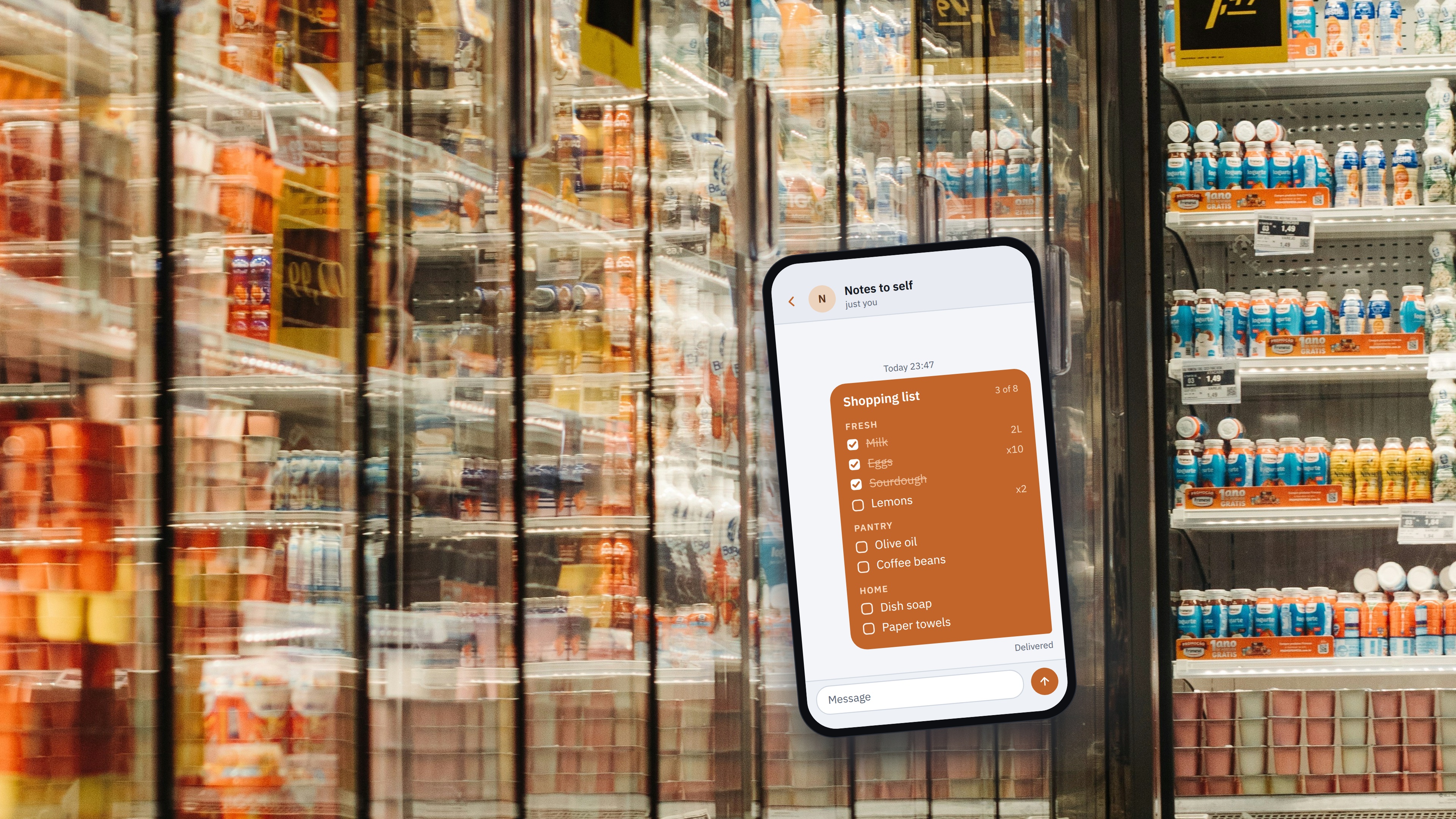
In May, Alibaba connected its Qwen assistant to all of Taobao and Tmall, more than four billion products, letting shoppers in China describe what they want and have the agent compare sellers, track prices and complete the order through Alipay. Amazon's Rufus can now buy automatically, and Google and OpenAI have built protocols that let machines pay on our behalf. The industry calls this agentic commerce, and its name for where it happens should make every packaging designer sit up: the invisible shelf.
The question it raises is simple and slightly alarming. If the shopper never walks the aisle, what exactly is the current pack for?
Colour was always a navigation system
Calbee's monochrome moment in May’s edition of The Brief was reported as a curiosity, a war story told through potato crisps, but it revealed something the industry rarely says out loud. Colour on a snack packet is less decoration than wayfinding. Decades of red for lightly salted and yellow-green for seaweed have taught Japanese shoppers to find their flavour at a glance. Take the colour away and you discover how much navigational work the brand was doing.
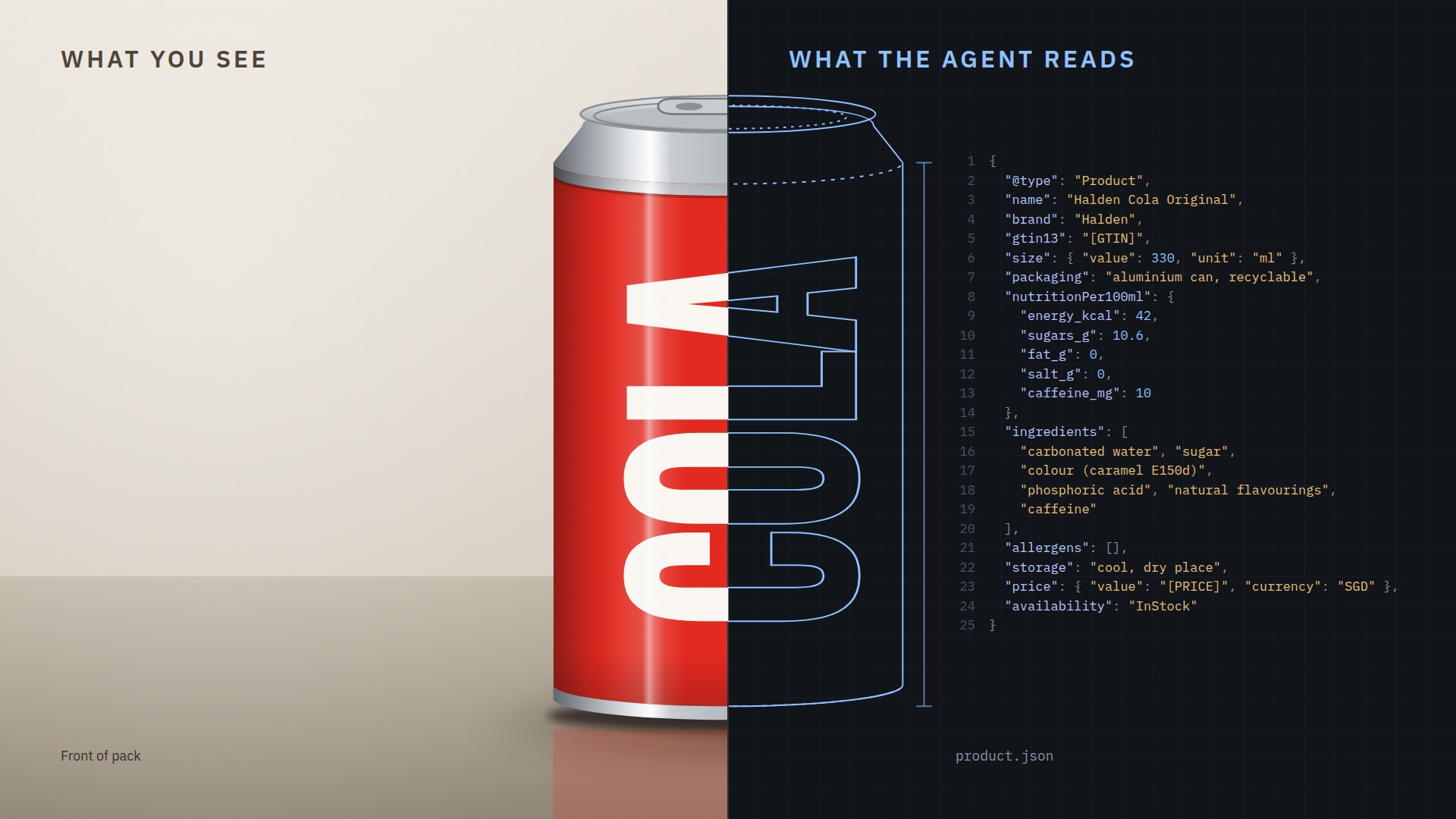
An AI agent does not navigate by colour. It navigates by attributes: pack size, unit price, allergens, delivery window, review sentiment and whatever the product data says. Harvard Business Review warned earlier this year that when product information is not structured for machines, agents simply guess. In categories like crisps or instant noodles, where functional differences are slim, a guessing machine optimising for price and availability is not a neutral intermediary. It is a commoditising one.
Here is the provocation. The physical shelf rewarded the brand that shouted loudest in the half-second a shopper glanced its way. The invisible shelf rewards the brand that is easiest to parse. These are different skills, and many of the region's best-loved brands have only ever practised the first.
Being asked for by name
One moment remains beyond any agent's control, and it is where the argument in our June edition of the Brief returns with force. Somebody still has to tell the agent what to buy. "Get me some chocolate malt drink" hands the decision to the machine, which will weigh price, stock and ratings. "Get me Milo" is an act of loyalty the machine is obliged to honour.
That difference is the whole game. The brands that thrive will be the ones people specify, and people only specify brands that mean something to them. Replenishment is where this bites hardest. Once a household lets an agent reorder detergent, rice and nappies on a schedule, the moment of choice disappears for months at a time, making the first purchase, and the reason behind it, more valuable than any promotional end-cap ever was.
This is authorship arriving in the supermarket. An agent can find the cheapest product that meets a specification, but it cannot supply a reason to care. That has to be built, decision by decision, by a brand that knows what it stands for.
Designing for the kitchen, not only the aisle
We would suggest three moves, in this order.
First, find out what the machines see. Ask an agent to recommend a product in your category, then read your product listings as structured data rather than marketing. Google now describes data as a form of packaging, and it is not wrong. If your distinctive claims live only in front-of-pack imagery, they are invisible to the systems brokering a growing share of purchases.
Second, redirect the pack's job. If fewer decisions happen in the aisle, the pack's most important audience becomes the person who already owns it, pouring it, storing it and running out of it at home. Packaging becomes less a billboard and more a memory device, planting the name a household will say out loud next time. Calbee proved people notice when a familiar pack changes. The opportunity is to make it worth remembering in the first place.
Third, be precise about meaning. A brand that stands for "quality" or "freshness" gives an agent nothing to distinguish it and a person nothing to ask for. A brand that stands for something specific, ownable and true can be encoded in data and remembered by people. The discipline is the same for both audiences, and it is the one many brands find hard to do.

The shelf has moved
None of this means the physical store is finished, or that agents will get everything right. OpenAI stepped back from in-chat checkout in March, a reminder that the model is still being worked out. But the direction is clear enough to act on. The shelf is moving from the aisle into a conversation, where a brand either has a name worth saying or becomes a line in a spec sheet.
The brands that hold their ground will be the ones that decide, now, which of those they intend to be.
If you are wondering what an AI agent sees when it looks at your brand, and whether anyone is asking for you by name, that is a conversation we would be glad to have at hello@bonseydesign.com.